
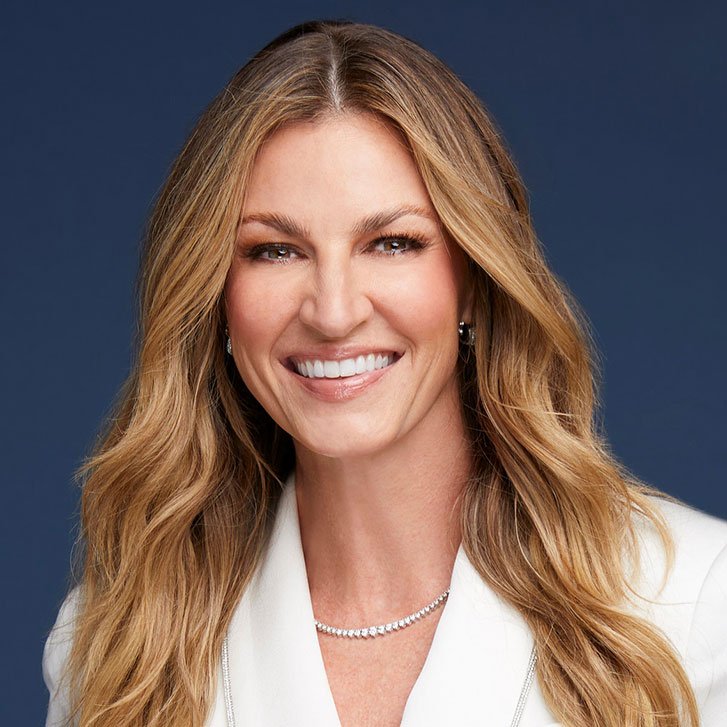
I’ve lost count of how many Sundays I’ve watched Erin Andrews on the sideline and thought, “Yep—this moment isn’t just for TV; it’s a photograph waiting to happen.” Her interview cadence, how she positions herself, the way players respond—those beats shape what audiences expect to “feel” from a game. And whether we like it or not, that expectation sits squarely on our shoulders too as sports photographers.
How Erin Andrews shifted the sideline story
Erin Andrews helped mainstream the idea that the sideline is more than a boundary; it’s a front-row stage for human stories. When a broadcast cuts to her report, viewers expect immediacy, emotion, and clarity. That ripple hits us behind the viewfinder. We’re not just freezing a tackle anymore—we’re capturing context: the nervous rookie listening in, a coach’s glance, a teammate’s subtle tap on the helmet. It’s the connective tissue that turns a highlight into a narrative.
Practically speaking, that means timing reaction frames with broadcast beats, staying clean in composition so editors can pair frames with lower-thirds and graphics, and working around presenters and camera ops without breaking the flow. If you’ve ever shot alongside a broadcast team, you know the dance. And Erin’s pace—the quick toss, the follow-up question, the handoff back to the booth—has nudged our cadence faster too.
What that means for your photography on game day
- Anticipate the story beats. If a star player is returning from injury, plan for the pregame warm-up, a sideline check-in, and the first snap. Shoot reaction frames before and after the broadcast interviews.
- Compose for clarity. Leave safe space for editorial graphics. Clean backgrounds read better on-air and online. Brush up on exposure fundamentals here: Balancing Exposure Manually and Understanding Light.
- Mind the lanes. Don’t clip the broadcast path. You’re a guest on that stage—respect producers, cables, and live hits.
- Build a two-body kit. One long prime or tele zoom for action, one mid-tele for storytelling (reactions, coaches, presenters). Gear checklist help: Camera Kits & Equipment.
- Deliver fast. Editors want selects during the quarter break. If you can’t push from camera, push from a laptop with hot FTP presets.
Recommended sideline gear that keeps up with broadcast pace
For flagship bodies, I rotate between mirrorless systems with deep buffers and sticky AF. If you’re weighing options, skim our guide to Best Full-Frame Cameras—then pair with fast glass:
- Action zoom: 70–200mm f/2.8 (my default on a second body). Quick Amazon search (affiliate): 70-200mm f/2.8 options.
- Field long: 400mm f/2.8 for downfield plays and end-zone drama. (Affiliate) Shop 400mm f/2.8.
- Workhorse bodies: Canon EOS R3, Nikon Z9, Sony a1. (Affiliate) R3 | Z9 | a1
- Monopod: Saves your back and stabilizes long glass. (Affiliate) Carbon fiber monopods.
- Weather cover: Sidelines get messy. (Affiliate) Camera rain covers.
- Media: CFexpress Type B, UHS-II SD for backups. (Affiliate) Fast CFexpress cards.
Settings that work when the play clock is ticking
Football under lights? I start around 1/1000–1/1600 s, f/2.8–f/3.5, and ISO 3200–6400, then adapt. Day games give you room to ride lower ISOs; night games demand fast glass and smart noise handling. Refresher reads: Shutter Speed, Aperture, and ISO.
For color, TV lighting can shift minute to minute. Lock a Kelvin value if the light is consistent, or lean on custom white balance. If you shoot RAW (you should), you’ll have plenty of latitude later—see Working in RAW and White Balance.
Sideline rule of thumb: if broadcast is rolling, you’re either shooting the play or making the picture that explains it.
— Field note from the 50-yard line
Fast delivery: from camera to editor in minutes
Erin’s pace puts pressure on turnarounds. I tag in-camera, push JPEGs via FTP during breaks, then send RAWs postgame. If you ingest after the whistle, cull with Photo Mechanic, caption fast, and export pre-baked crops for social and web. Helpful deep-dives: Post-Production and Image Resolution.
- Speed culling: (Affiliate) Photo Mechanic
- Noise + detail: (Affiliate) Topaz Photo AI or Adobe’s Denoise in Lightroom Classic
- Connectivity: Prep your camera’s FTP profiles and smartphone hotspot before kickoff
Etiquette, safety, and collaboration
Broadcast crews have their choreography. Don’t cut across a live shot, don’t crowd an interview, and give audio techs a clean bubble. Keep your ears open—if a producer waves you clear, trust they’re saving your shot (and your ankles). Also, confirm venue rules about remote cameras and end-zone clamps well before call time.
A quick sequence from my notebook
- Pregame: watch Erin’s first hit—note which players she mentions; they’re likely story drivers.
- First series: set 1/1600 s, f/2.8, Auto ISO cap at 6400. Long lens for action, 70–200mm for cutaways.
- Timeout: look for the huddle with the injured starter; capture coach’s body language and teammate reactions.
- Halftime: push two selects via FTP with tight captions. Editors love speed more than perfection here.
- Postgame: if there’s a quick interview, frame wide enough to include talent, mic flag, and player—clean, publishable context.
Further reading on NepShoot
- Erin Andrews: Sports, Photography, and Media
- Bridging Sports and Photography
- The Role of Photography in Sports Broadcasting (FOX Sports)
- Mirrorless Camera Guide
- Filters for Camera Lenses (when they help—and when they don’t)
And if you’re just getting started with exposure and focus for action, this trio is gold: Focusing, Controlling Movement, and Depth of Field.
Affiliate disclosure: Some links in this article are affiliate links. As an Amazon Associate, NepShoot may earn from qualifying purchases—at no extra cost to you.
Big picture: Erin Andrews didn’t “invent” sideline storytelling, but she’s one of the talents who raised the bar for pace, clarity, and human detail. If we match that energy—thoughtful gear choices, tight settings, faster delivery—we give editors the frames they need and fans the emotion they came for. See you on the hash marks.