
Disclosure: This story contains affiliate links. If you buy through them, we may earn a small commission at no extra cost to you. I only recommend gear I trust on real sidelines.
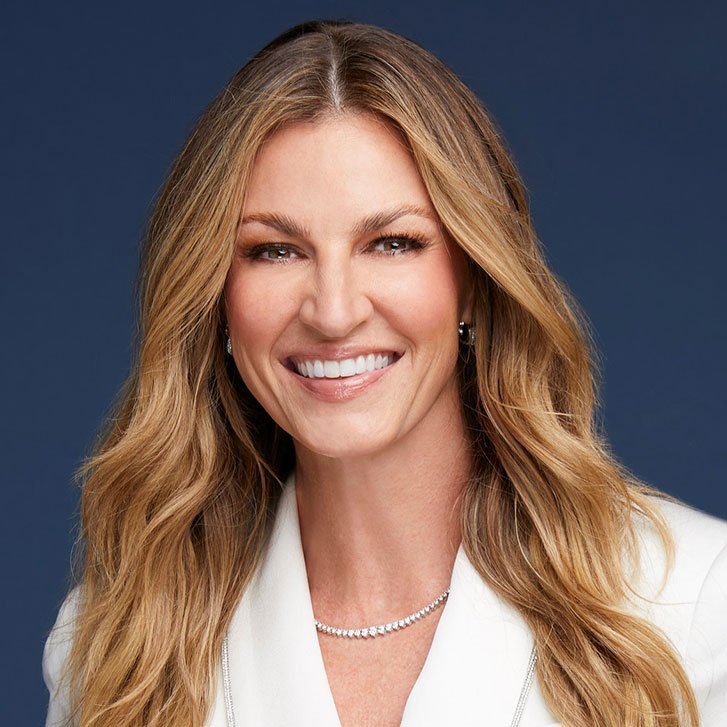
I’ve lost count of how many big games I’ve photographed where a sideline interview shaped the entire visual rhythm of the night. Erin Andrews has been at the center of that rhythm for years. Even if you’re shooting from the opposite end zone, you can feel when the broadcast leans into a storyline — and your images either amplify it or get left behind in the editor’s bin.
Why Erin Andrews matters to sports photographers
Andrews’ work has done something subtle but massive for our craft: it tightened the feedback loop between on-field story and on-screen picture. Quick hits on injuries, matchups, and human moments mean editors and social teams need cutaways and reactions that fit those beats right now. If you’re tuned into the report, you’re already moving to the next frame before the crowd even reacts.
Her presence also normalized a more collaborative sideline — photographers, videographers, and reporters flowing around each other instead of fighting for the same square foot of turf. When that choreography works, the pictures feel effortless. When it doesn’t… well, we’ve all got a story about a boom mic creeping into the edge of a hero frame. It happens.
If you’re curious about the bigger ecosystem of broadcast visuals, I wrote about it here: The role of photography in sports broadcasting. And for more context on Andrews specifically, see these companion reads: Erin Andrews: Sports, Photography, Media, Bridging sports and photography, and Media coverage deep dive.
How sideline reporting shapes your shot list
- Anticipate the hits: Pregame walk-and-talks, tunnel exits, and postgame interviews happen on repeatable marks. I pre-map a route that keeps me clear of cables and still gives a clean background.
- Cover the reaction arc: Big play → crowd → bench → coach → interview setup. One sequence, five story beats. Editors love it.
- Leave space for the mic: When a reporter steps in, shift a half-step to preserve eye-line and reduce clutter. You’ll save yourself a crop later.
- Clean frames over everything: Screens, LED ribbons, and TV pylons flare and clip highlights. Angle a few degrees and you’ll keep color clean for broadcast.
Sideline-ready gear that just works
I’m not precious about brands — I care about focus reliability, buffer depth, and controls I can hit with frozen fingers. These bodies have earned their keep next to the TV carts:
- Sony a9 III (global shutter, wicked AF, blackout-free) — Amazon
- Canon EOS R3 (eye-control AF can be magic in chaos) — Amazon
- Nikon Z9 (rock-solid AF, deep buffer, FTP workhorse) — Amazon
Glass that hits the sideline sweet spot:
- 70–200mm f/2.8 for bench, coaches, and interview frames — Amazon
- 400mm f/2.8 for downfield isolation and end-zone drama — Amazon
- Monopod rated for super-tele — Amazon
- Camera rain cover for sudden weather — Amazon
- CFexpress Type B cards with fast sustained writes — Amazon
If you’re assembling a kit from scratch, bookmark our guides on best full-frame cameras and essential camera kits and equipment.
Settings that save the day (and your edit)
- Shutter speed: 1/1600s for football and rugby; 1/1000s for soccer/hoops as a baseline. Faster if it’s bright. More on why here: Shutter speed essentials.
- Aperture: f/2.8–f/4 for isolation during interviews and bench reactions; stop down to f/5.6 for group celebrations.
- Auto ISO with a cap: Set a ceiling that preserves skin tones; nudge exposure comp +0.3–0.7 for dark jerseys under LED lights. Refresh on ISO and white balance.
- AF mode: Continuous AF with subject tracking; back-button focus to keep fingers calm during chaos.
- Safety frames: When a reporter steps in, grab a quick two-shot at 70–120mm before you hunt for the tighter portrait.
On-deadline workflow that keeps up with TV
Modern broadcasts move fast; your pictures need to move faster. I ingest and caption with Photo Mechanic, then push selects via FTP from camera or laptop hotspot. The a9 III, R3, and Z9 all support wired/wireless FTP and IPTC templates — set them up before warmups. If you’re polishing for social or a gallery, a tight RAW->JPEG pass in post-production is plenty. If you’re new to flexible files, read Working in RAW.
Work the sideline respectfully
- Don’t block the shot: Give broadcast cameras a clean line even if it costs you the angle. There’s always another play.
- Mind the cables: Trip over one and you’ll learn the hard way. Tape lanes exist for a reason.
- Signal your moves: Eye contact and a small hand raise before you cross a live camera’s frame keeps everyone cool.
Moments to anticipate when Andrews takes the mic
- The pivot shot: Athlete hears the first question — micro-expression changes. That half-second is gold at 200mm.
- Background reactions: Teammates drifting into frame with trophy cases, confetti, or fans — shoot through shoulders for depth.
- Context plates: A clean wide establishing the interview location (logos, field paint, weather) helps editors stitch your sequence.
If you want to sharpen the optics side of this, dig into choosing the right lenses and practical filters for stadium lighting.
Final thoughts
Erin Andrews didn’t change photography by talking about it — she changed it by giving our pictures tighter purpose inside live storytelling. If you listen for those beats, pick smart angles, and keep your workflow humming, your frames will ride the broadcast wave instead of chasing it. And if you miss a moment (we all do), reset, breathe, and nail the next one.